A Guide to Seasonal Korean Food: What Koreans Eat Throughout the Year
From spring namul to winter kimjang, a season-by-season guide to the foods Koreans eat each time of year — and the cultural background that makes them matter.
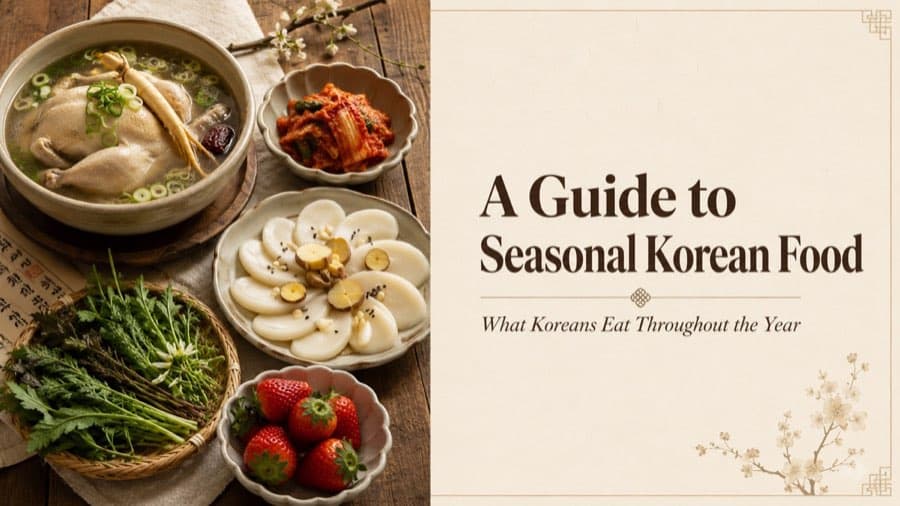
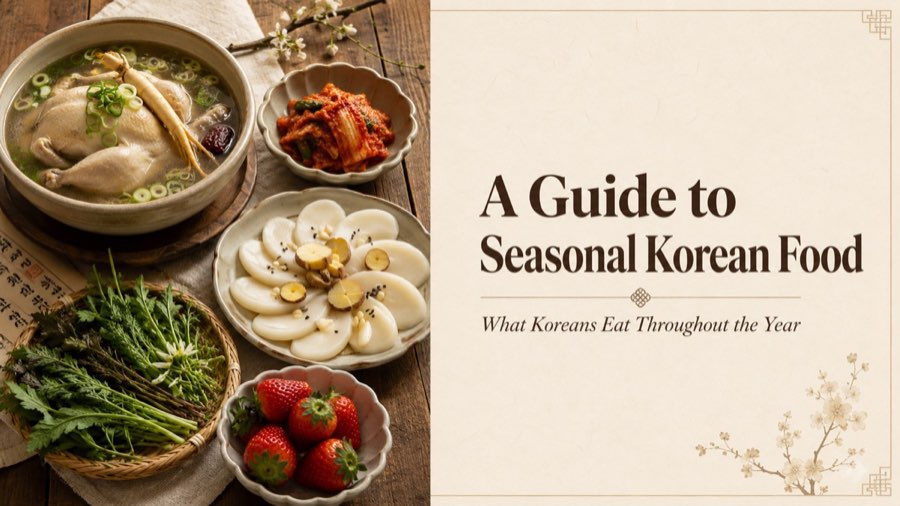
One of the defining features of Korean food culture is the concept of jecheol eumsik — seasonal food. Living through four distinct seasons, Koreans have built a tradition of eating what tastes best at each time of year. This isn't just habit — it's a culture tied to health and to living in tune with nature.
Foreigners in Korea sometimes wonder why a certain dish suddenly appears everywhere. In most cases, the answer is that it's in season. This post walks through the Korean calendar season by season, introducing the foods Koreans eat at each time of year and the cultural background behind them.
Spring (March–May) — The Energy of New Sprouts
Korean spring begins with the wild herbs (namul) that push up through the mountains and fields after a long winter. Koreans describe these spring greens as having a "bitter" taste — a bitterness believed to wake up the body and revive the appetite after winter dormancy.
Naengi (shepherd's purse) and dalrae (Korean wild chive) are the heralds of spring. Naengi is famous in doenjang-guk (soybean paste stew), where its aroma shines. Dalrae is chopped and mixed into soy sauce to make dalraejang, a relish mixed into rice. Dureup, meowi, and ssuk (mugwort) also fill the markets at this time.
Strawberries are Korea's pride among spring fruits. Korean varieties like Seolhyang, Jukhyang, and Geumsil have become premium fruits in Southeast Asia and Japan. The sweetest period is March to April.
Stir-Fried Jukkumi (webfoot octopus) is another spring delicacy. About to spawn in spring, jukkumi has plump flesh and a strong natural sweetness. Stir-fried in a spicy sauce and eaten with perilla leaves, it's a classic spring outing dish.
Summer (June–August) — Stamina Food to Beat the Heat
Korean summers are humid and hot. In temperatures well over 30°C, Koreans embrace a unique food philosophy: iyeolchiyeol (以熱治熱) — fighting heat with heat.
Samgyetang (ginseng chicken soup) is the summer stamina food. A young chicken is stuffed with ginseng, jujubes, sticky rice, and garlic, then simmered for hours. There's a tradition of eating samgyetang on the three hottest days of the year — Chobok, Jungbok, and Malbok, collectively called bok-nal. On these days, lines stretch one to two hours outside famous samgyetang restaurants.
Naengmyeon (cold noodles) is summer's other star. Pyongyang naengmyeon features delicate buckwheat noodles in a cold dongchimi broth. Hamheung naengmyeon uses sweet potato starch noodles tossed in a spicy sauce. They share a name but are essentially different dishes.
Watermelon and Korean Melon are the twin pillars of Korean summer fruit. Korean melon (chamoe) is a uniquely Korean fruit — yellow on the outside, with a crisp, refreshing texture inside. It may be unfamiliar to foreigners at first, but many become hooked.
Patbingsu is the original K-dessert. Finely shaved ice topped with sweet red bean, rice cakes, condensed milk, and fruit. Premium variations like mango bingsu, injeolmi bingsu, and black sesame bingsu have become trends in recent years.
Autumn (September–November) — The Season of Abundance
In Korea, autumn is described as cheongomabi — the sky is high and horses grow plump. It's the season when food is at its most abundant.
Jeoneo (gizzard shad) is the iconic autumn fish. There's an old saying — "Even a mother-in-law won't share her autumn jeoneo" — that's how prized it is. Grilled whole and eaten with the bones, it's at its peak in autumn.
Chuseok Foods are the heart of autumn culture. Chuseok is Korea's harvest festival, falling on the 15th day of the 8th lunar month. Families gather to share traditional dishes — songpyeon (half-moon rice cakes), jeon (savory pancakes), japchae, and galbijjim. There's a saying that if you shape your songpyeon beautifully, you'll have beautiful children.
Chestnuts, Persimmons, and Pears represent Korean autumn fruit. The sweet persimmon reaches its peak sweetness, and Korean pears — large with refreshing juice — are valued as premium fruit abroad.
Winter (December–February) — Fermentation and Warm Comfort
Korean winters are long and cold. With temperatures dropping below -10°C, Koreans get through the cold with fermented foods and hearty broth-based dishes.
Kimjang is the essence of Korean winter culture. From late November to early December, families gather to make a year's worth of kimchi all at once. Kimjang was added to UNESCO's Intangible Cultural Heritage list in 2013. After the work is done, families enjoy kimjang bossam — warm boiled pork with freshly made kimchi.
Hoppang, Bungeoppang, and Hotteok are the three pillars of winter street food. Standing on a cold street, blowing on your hands, and biting into a warm hotteok captures the essence of Korean winter.
Tteokguk is the dish that opens the new year. Eaten on Seollal (Lunar New Year's Day), tradition says eating one bowl makes you one year older.
Tips for Foreigners Enjoying Seasonal Korean Food
Visit traditional markets. Places like Gwangjang Market, Mangwon Market, and Tongin Market are the best way to feel the seasons. The ingredients on display change completely with the seasons.
Use large supermarkets. Emart, Homeplus, and Lotte Mart often have dedicated "seasonal recommendation" sections in their produce aisles.
Search seasonal restaurant keywords. On Naver Map or Kakao Map, searching terms like "samgyetang restaurant" or "jeoneo restaurant" leads you to the spots locals actually visit.
Closing Thoughts
Korean food follows the rhythm of nature. Spring wakes the palate with the bitterness of new sprouts. Summer fights heat with hot, restorative dishes. Autumn shares the year's harvest. Winter draws warmth from fermentation. If you live in or visit Korea, try the foods that only appear during the season you're there. It's one of the deepest ways to understand the country.
You may also like
You may also like


Related Posts

Korean Hair Salon Phrases: How to Ask for a Haircut You Actually Want
Worried about explaining a haircut in Korean? Short phrases for a Korean hair salon: asking about appointments, confirming the service and total price, using a reference photo, agreeing on length before cutting, speaking up during the wash, and checking the result, plus a practice conversation.

Korean Clothing Store Phrases: Try Things On, Find Your Size, and Ask About Exchanges
Shopping for clothes in Korea? Short Korean phrases for browsing, asking for another size or color, using the fitting room, checking prices and alterations, asking about exchanges and refunds before paying, answering checkout questions, and returning an item for a different size.

Korean Taxi Phrases: Show Your Destination, Ask Questions, and Pay with Confidence
Taking a taxi in Korea without speaking Korean? Short phrases to show your destination, answer the driver's questions, explain luggage and passengers, ask about time and fares, request a safe stop, and confirm payment and receipts, plus a practice conversation.