Why Korean Students Take 'Hyu-hak' for Granted: A Complete Guide to Korean University Leave of Absence for International Students
Half of Korean university students take a leave of absence (hyu-hak) before graduation. For international students, the same word silently touches your visa, scholarship, dorm, insurance, and graduation clock — here is the full admin-side guide.
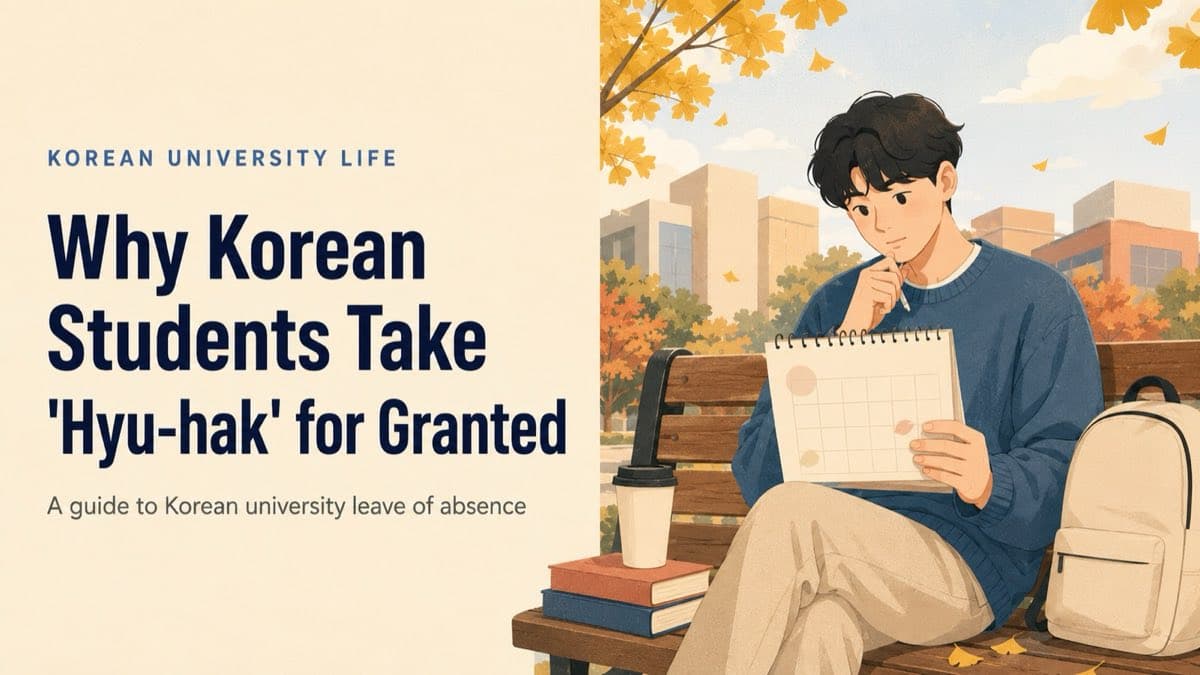
In most Western universities, taking a leave of absence is reserved for serious situations — health issues, family emergencies, parental leave. Administratively, it's treated as an exception. In Korean universities, it's the opposite. According to the Ministry of Education, roughly 50% of four-year university students take at least one leave of absence before graduation. In some departments, by the first semester of senior year, the figure exceeds 70%. And nobody finds this unusual — it's closer to a rite of passage.
If you don't know this, you'll be puzzled when your Korean friends casually mention, "I think I'll take next semester off." The bigger problem is that when international students decide to take a leave themselves, they often rely on casual advice from Korean friends — and then run into serious trouble with their visa, scholarship, or dorm contract. We see these cases in the admin office every single semester.
This post breaks down Korea's "hyu-hak" (휴학) culture from a behind-the-desk perspective, and walks through the administrative, visa, and financial details international students must understand before pressing "submit" on a leave application.
Why Korean Students Actually Take Leave
The most common reason isn't what you'd expect — it's not poor grades or a change of heart about the major.
For male students, the dominant reason by far is military service. Korean men are required to serve roughly 18 months, and most enlist during their first or second year of university. That means even students who entered in the same year often graduate two years apart. Korean university administration was simply not designed around the assumption of "four uninterrupted years."
For female students, and for male students after returning from service, the reasons diversify. In rough order of frequency:
- Language study abroad: 6–12 months, typically in English-speaking countries, Japan, or China.
- Internships: Full-time placements that can't fit around class schedules — especially in IT, finance, and chaebol-track positions.
- Professional exam preparation: Time-intensive credentials like CPA, patent attorney, or higher civil service exams.
- Civil service exam preparation: 9th, 7th-grade exams, teacher certification exams.
- Job search preparation: A "job-hunting leave" right before senior-year fall semester, timed to the major corporate hiring cycle.
So in the Korean university context, a leave of absence isn't really about "taking a break." It's about strategically using time outside the classroom. Think of it as a gap year culture quietly embedded inside the academic system.
General vs. Military vs. Medical Leave — The Categories
Most Korean universities recognize several distinct categories of leave. Specific rules vary by school, so always confirm with your own institution's regulations.
- General leave (일반휴학): The most common type. Many schools allow up to four semesters (two years) total. Some allow six.
- Military leave (군휴학): Requires an official enlistment notice from the Military Manpower Administration. Time served does not count against your general leave allowance.
- Medical leave (질병휴학): Requires a doctor's diagnosis. Usually separate from the general leave allowance, though some schools require renewed documentation each semester.
- Maternity/childcare leave: A relatively recent addition. Availability varies by university.
- Entrepreneurship leave: Offered at some universities. Requires submission of a business registration certificate and business plan.
International students aren't affected by military leave, but the rules on general and medical leave differ from school to school. Some universities also impose stricter caps on international students than on Korean students. If you can't find an English version of the academic regulations, the safest move is to ask the Office of International Affairs directly.
Five Things International Students Must Check Before Taking Leave
Based on cases that recur every semester in admin offices, there are five critical checkpoints for any international student considering a leave of absence.
1. Visa Status (the most important)
The D-2 student visa assumes you are actively enrolled and progressing normally. If you take a leave, you must report the change to the Immigration Office. Failing to do so can create problems at your next visa renewal. Stays in Korea during a leave of absence are typically limited to six months — beyond that, you'll need documentation to justify staying (an internship contract, medical records, etc.). If you plan to return to your home country during the leave, also check the 90-day re-entry rules.
2. Scholarships
KGSP/GKS, university scholarships for international students, and external foundation scholarships are usually suspended during a leave of absence. More importantly, they often don't resume automatically when you return. Some scholarships even permanently disqualify recipients who take leave. Always contact the Scholarship Office before applying. "My friend kept her scholarship through hyu-hak" is not a guarantee that the same will apply to you.
3. Dormitory
Students on leave usually lose dormitory eligibility. Some schools offer short-term grace periods for international students, but the default rule is "current students only." Before deciding, confirm:
- The deposit refund schedule (most schools settle per semester)
- Whether you can store your belongings (usually no)
- Whether re-entry is automatic or requires a new application
4. Health Insurance
International students are automatically enrolled in National Health Insurance after six months in Korea, paying roughly 70,000 KRW per month. If you leave Korea during a leave of absence, contact the National Health Insurance Service in advance to clarify how your coverage will be handled. If you remain in Korea during your leave, premiums continue to be charged.
5. The Graduation Clock
The D-2 visa assumes you'll graduate within the standard program length (usually four years) plus a limited grace period. Repeated leaves can lead to visa renewal denials, or push your graduation date past your visa expiration. Recalculate your expected graduation semester before applying for leave.
The Three Most Common Mistakes Seen From the Admin Side
Ranked by how often they happen each semester:
1. Missing the Application Deadline
Korean universities typically accept leave of absence applications only within the first two to four weeks of the semester. After that, you're no longer applying for "leave" — you're applying to withdraw, and your tuition may not be refunded. Don't rely on friends. Check the academic calendar and confirm with your own college's admin office.
2. Misunderstanding the Tuition Refund Schedule
If you've already paid tuition and then take a leave, your refund depends on how far the semester has progressed. Typically: 100% before classes start, dropping to 50% after about one-quarter of the semester has passed, and so on. The myth that "you get your tuition back anyway if you take leave" causes someone to lose money every single semester.
3. Skipping the Advisor Consultation
Most schools require an advisor's signature on the leave application. International students often have minimal contact with their advisors and end up emailing them for the first time right before submitting. If the professor is traveling or slow to reply, you miss the deadline. Once you've decided, start with your advisor before tackling the paperwork.
Closing Thoughts
When a Korean friend casually says "I might take next semester off," don't be surprised. It's a normal option built into the Korean university system. But for an international student, the same word — "hyu-hak" — simultaneously affects your visa, scholarship, dormitory, health insurance, and graduation timeline.
If you're seriously considering it, meet two people before making the call: your academic advisor, and a staff member at the Office of International Affairs. Even a single week of consultation with both will let you sidestep about 70% of the traps that Korea's leave-of-absence system creates for international students.
You may also like
You may also like
Related Posts
Who Should You Contact at a Korean University? A Guide to Campus Offices
"Please contact another office." Finding the right person at a Korean university can feel like an extra assignment. Here is how to identify the responsible office, write a message that gets answered, and keep the conversation moving when you are redirected.

Using AI to Understand Korean University Notices: What to Double-Check
AI can translate a Korean university notice in seconds — and make an uncertain interpretation sound settled. Here is how to let AI organize the notice while keeping the original as the reference, plus a reusable prompt and a verification checklist.

An HWP or HWPX File Won't Open? Here's What to Do in Korea
Your school sends a form and it will not open — the filename ends in HWP or HWPX. What it is, when a free viewer is enough, when to ask your school first, and how to avoid buying software you may not need.